
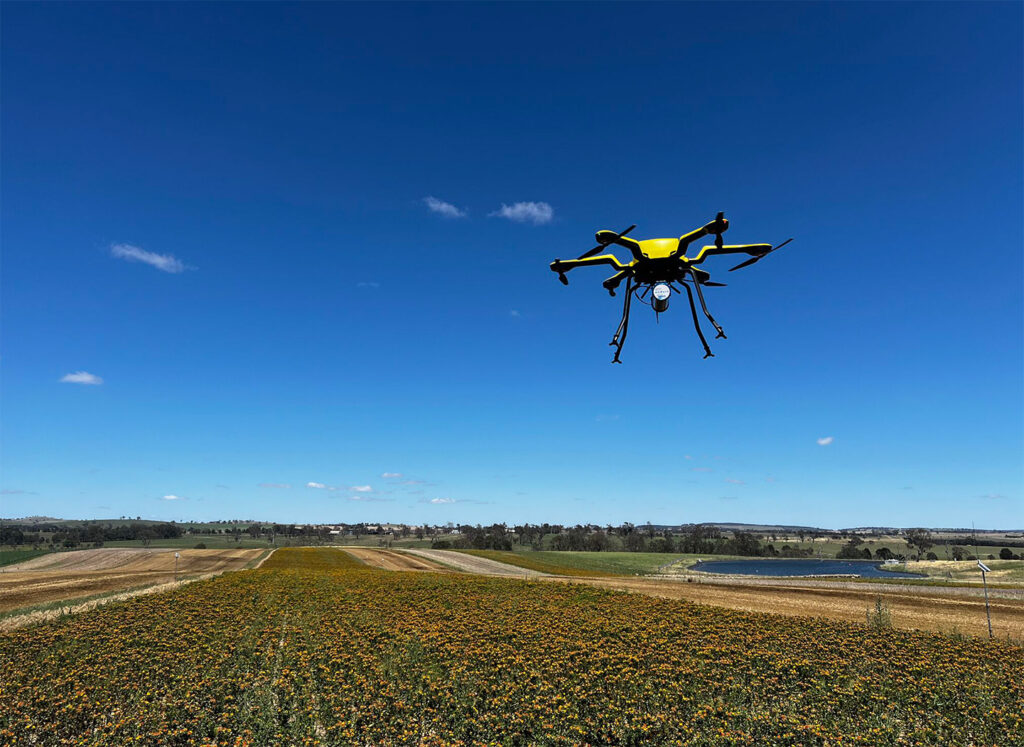
Yes. Contamination mapping is one of the core applications of Medusa gamma-ray sensors. The technique is particularly effective for detecting radioactive contamination, including:
- Cs-137 — a fallout radionuclide from nuclear testing and accidents (e.g. Chernobyl, Fukushima), used as a tracer for soil erosion and deposition.
- Uranium and thorium anomalies — which may indicate legacy industrial contamination or naturally elevated concentrations (NORM).
- Industrial NORM — naturally occurring radioactive material associated with oil and gas operations, mining residues, or phosphate processing.
Because Medusa sensors measure the full gamma-ray energy spectrum, they can distinguish between different radionuclides based on their characteristic energy peaks — enabling identification and quantification, not just detection.
Contamination surveys are typically performed as detailed grid surveys or targeted scans of known risk areas. The resulting maps help prioritise remediation and provide defensible documentation for regulatory purposes.